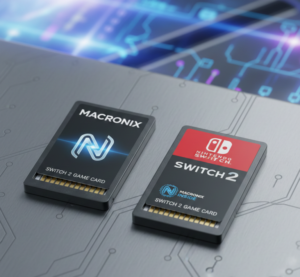
The gaming world is buzzing with excitement after recent revelations about the future of Nintendo Switch 2 physical media. Macronix, the Taiwanese memory manufacturer trusted by Nintendo for years, has dropped hints that could completely transform how we experience games on the upcoming console. According to their latest financial reports, Macronix Nintendo Switch 2 game cards are set to receive significant storage upgrades that could solve one of the platform’s biggest problems.
The Game-Changing Announcement from Macronix
In a recent fiscal update that sent ripples through the gaming community, Macronix Electronics revealed critical information about their ongoing partnership with Nintendo. The company disclosed that their ROM products are primarily used in both Nintendo Switch and Nintendo Switch 2 game cartridges, but more importantly, they outlined a revolutionary shift in their manufacturing approach.
Macronix plans to utilize both in-house MLC NAND and outsourced 3D NAND technology to meet varying capacity requirements for future game cards. This hybrid approach represents a dramatic departure from the current single-size cartridge option that has been limiting developers and frustrating players since the Switch 2’s launch.
The implications of this announcement are enormous. Currently, the Switch 2 offers publishers only one cartridge option: an expensive 64GB format. This limitation has forced many third-party developers to make difficult choices that ultimately hurt consumers and collectors alike.
Understanding the Current Switch 2 Storage Crisis
Before diving deeper into what Macronix’s announcement means, it’s essential to understand the problem Nintendo Switch 2 owners have been facing. The console launched with a single high-capacity cartridge option that, while impressive in size, comes with a hefty price tag for publishers.
Reports suggest that Nintendo charges publishers approximately $16 per 64GB cartridge, in addition to standard royalties. For smaller games that don’t require anywhere near 64GB of storage, this represents a massive and often unjustifiable expense. The result? Many publishers have opted for the controversial “Game-Key Cards” instead.
Game-Key Cards have become one of the most divisive aspects of the Switch 2 ecosystem. These physical packages contain a card that unlocks and downloads the full game via the internet, rather than actually storing the game data. While they provide a physical SKU for retail shelves, they’ve drawn intense criticism from gaming enthusiasts and collectors who value true physical media.
The frustration is understandable. Game-Key Cards combine the worst aspects of both digital and physical gaming. Like traditional cartridges, you still need to visit a store or wait for shipping. But unlike real cartridges, you must have an internet connection to download the game, and you lose the preservation benefits that come with owning the actual game data on a physical medium.
The Technology Behind Macronix Nintendo Switch 2 Game Cards
To appreciate the significance of Macronix’s announcement, it helps to understand the technology they’re implementing. The company plans to use a combination of MLC NAND (Multi-Level Cell) and 3D NAND flash memory technologies.
MLC NAND stores two bits of information per memory cell, while 3D NAND can store three bits. This increased density means 3D NAND can potentially offer up to ten times the storage capacity of older 2D NAND per unit of area. The technology is more cost-effective to produce at scale, which could translate to lower manufacturing costs for game publishers.
However, there are trade-offs to consider. 3D NAND technology may result in cartridges with potentially shorter lifespans and slower read/write speeds compared to current Switch cartridges. This is likely why Macronix is taking a hybrid approach, using their own MLC NAND for certain applications while outsourcing 3D NAND for others.
The combination allows Macronix to offer a wider range of cartridge sizes while maintaining the durability and speed that Nintendo games require. This flexibility is exactly what the Switch 2 ecosystem desperately needs.
What This Means for Game Publishers and Developers
The introduction of varying capacity Macronix Nintendo Switch 2 game cards could be a game-changer for third-party publishers. Instead of being forced to choose between an overpriced 64GB cartridge or the unpopular Game-Key Card option, developers would have access to more appropriately sized and priced storage solutions.
Industry insiders speculate that these new options could include 16GB and 32GB cartridges, sizes that would be perfect for many cross-platform titles that don’t require the full 64GB capacity. This would make it economically viable for more publishers to release complete games on physical media rather than resorting to Game-Key Cards.
The current situation has been particularly frustrating for games that previously fit comfortably on original Switch cartridges. Some cross-generation titles that ran perfectly fine on a Switch 1 cartridge now require downloads on Switch 2 simply because the only available option is the 64GB format, which publishers find too expensive for smaller games.
With Macronix’s new approach, publishers could select the most cost-effective cartridge size for their specific needs. A 20GB game wouldn’t need to force publishers to pay for 64GB of storage, making physical releases more financially practical across the board.
The Impact on Physical Game Collectors
For gaming enthusiasts who value building physical collections, Macronix’s announcement brings a glimmer of hope. The gaming community has been vocal about their displeasure with Game-Key Cards, with many collectors refusing to purchase titles released in this format.
The introduction of more affordable cartridge options could encourage publishers to move away from Game-Key Cards and back toward traditional physical media. This would benefit preservation efforts, as true physical cartridges don’t require server access or digital storefronts to remain playable decades into the future.
Nintendo recently launched a customer survey in Japan specifically asking about physical game releases, Game-Key Cards, and digital downloads. The timing suggests the company is aware of the backlash and may be reconsidering its physical media strategy. Macronix’s technological advancements could provide Nintendo with the tools needed to address fan concerns while still offering publishers economically viable options.
The Broader Context: Gaming Industry Trends
The controversy surrounding Macronix Nintendo Switch 2 game cards isn’t happening in isolation. The entire gaming industry is grappling with the transition toward digital distribution and the declining relevance of physical media.
Sony’s PlayStation 5 offers both disc and digital-only versions, while Microsoft has been pushing Game Pass and cloud gaming aggressively. Even traditionally physical-focused companies are exploring digital-first strategies as production costs rise and profit margins narrow.
Nintendo has historically been the holdout, continuing to prioritize physical media when other companies have moved away. However, the Game-Key Card situation suggests even Nintendo is feeling economic pressure to find alternative solutions. The high cost of flash memory and specialized game cartridges makes purely physical distribution increasingly challenging from a business perspective.
Macronix’s hybrid approach using different NAND technologies represents a compromise that could satisfy multiple stakeholders. Publishers get more affordable options, Nintendo maintains its physical media presence in retail, and collectors can continue building genuine physical libraries.
Technical Considerations and Performance
While the storage capacity improvements are exciting, there are legitimate concerns about performance. Several Switch 2 developers have publicly stated that traditional cartridges lack the data transfer speeds needed to match games installed on the console’s UFS 3.1 internal memory, which supports sequential read and write speeds up to 2,100 MB/s and 1,200 MB/s.
This speed difference is one reason some publishers have justified using Game-Key Cards despite fan backlash. If the game data is installed on the faster internal storage, it can theoretically provide better performance than reading directly from a cartridge.
Macronix’s challenge will be producing cartridges with varying capacities that still maintain acceptable read speeds. The hybrid NAND approach suggests they’re aware of these concerns and are working to balance cost, capacity, and performance. However, some performance trade-offs may be inevitable, especially with the more affordable lower-capacity options.
Timeline and Future Availability
According to Macronix’s financial reports, the company expects ROM product shipments to recover and grow following the Switch 2’s launch, though the exact timing depends on market demand. Some reports suggest Macronix hasn’t been producing Switch 2 cartridges up to this point, with a different partner named Rohm handling initial production.
Macronix indicated to investors that they expect to begin manufacturing Switch 2 game cards in the second half of their financial year, pending Nintendo’s demand. This suggests the new varied-capacity cartridges might not appear immediately but could become available later in 2026.
The phased rollout makes sense from a manufacturing perspective. Nintendo likely wants to ensure quality control and supply chain stability before introducing multiple cartridge formats. Game publishers will also need time to evaluate their options and potentially adjust development schedules around the new possibilities.
What Games Are Already Using Full-Capacity Cartridges?
Cyberpunk 2077: Ultimate Edition is one of the most notable examples of Nintendo Switch 2 games using the 64GB game card, demonstrating that the capacity is genuinely necessary for some titles. Other games shipping fully on cartridges include Rune Factory: Guardians of Azuma, Story of Seasons: Grand Bazaar, and Daemon X Machina: Titanic Scion.
These examples prove that when publishers commit to physical media, the current 64GB option can accommodate even demanding modern games. The question has never been whether the technology works, but rather whether it’s economically practical for all game sizes.
The Consumer Perspective: What Should You Expect?
For Switch 2 owners and prospective buyers, Macronix’s announcement represents potential good news on multiple fronts. More cartridge options should mean more games receiving true physical releases rather than Game-Key Cards. This benefits anyone who values game preservation, prefers physical collecting, or has limited internet access.
However, it’s important to maintain realistic expectations. Even with more affordable cartridge options available, Game-Key Cards likely won’t disappear entirely. Some publishers may still prefer them for cost reasons, while others might cite performance concerns as justification.
The success of Macronix Nintendo Switch 2 game cards in reducing Game-Key Card prevalence will ultimately depend on pricing. If the new cartridge options are significantly cheaper than the current 64GB format, publishers will have strong incentive to use them. If the cost savings are minimal, the Game-Key Card trend may continue despite fan opposition.
Nintendo’s Response and Industry Implications
Nintendo’s public statements about Game-Key Cards have emphasized that they remain committed to physical games while acknowledging that publishers need options for bringing larger, more immersive content to the platform. The company has defended the system as necessary given the Switch 2’s increased internal storage capacity.
However, Nintendo’s recent survey about physical media preferences suggests they’re monitoring fan sentiment closely. The combination of negative feedback, Macronix’s technological advancements, and potential changes to the cartridge lineup could signal a shift in Nintendo’s approach.
Former Nintendo marketing personnel have suggested the company values physical retail presence highly and won’t abandon physical media entirely. They view Game-Key Cards as a compromise solution rather than a permanent replacement for traditional cartridges.
Looking Ahead: The Future of Physical Gaming
The situation with Macronix Nintendo Switch 2 game cards represents a microcosm of larger questions facing the gaming industry. As game file sizes continue growing and production costs increase, companies must find sustainable ways to serve consumers who still value physical media.
Technological innovations like Macronix’s hybrid NAND approach demonstrate that solutions exist. The challenge is implementing them in ways that satisfy publishers’ economic needs, meet performance requirements, and respect consumer preferences.
For Nintendo specifically, the resolution of the cartridge capacity issue could significantly impact the Switch 2’s legacy. The original Switch succeeded partly because it offered robust physical game support when competitors were moving away from it. Maintaining that advantage requires adapting to new economic realities while preserving what made physical media valuable in the first place.
Conclusion: A Potential Turning Point
Macronix’s revelation about utilizing varied NAND technologies for different capacity requirements represents more than just a technical specification update. It’s potentially a turning point in the ongoing debate about physical media on Nintendo Switch 2.
The introduction of multiple cartridge sizes at various price points could fundamentally alter publisher calculations about physical versus Game-Key Card releases. If implemented effectively, it might reduce the prevalence of the controversial Game-Key Cards while making physical game collecting on Switch 2 more viable and comprehensive.
However, the ultimate success depends on execution. Macronix must deliver cartridges that balance cost, capacity, and performance effectively. Nintendo needs to price these options attractively enough that publishers choose them over Game-Key Cards. And consumers must support physical releases with their purchasing decisions to demonstrate continued demand.
The gaming community will be watching closely as Macronix Nintendo Switch 2 game cards evolve in the coming months. For physical media advocates, this development offers genuine hope that the format they love isn’t going extinct quite yet. For the broader industry, it provides a potential model for how traditional and digital distribution can coexist sustainably.
As the Switch 2 continues its lifecycle, the choices Nintendo and its partners make about physical media will help define the console’s identity and legacy. Macronix’s technological advancements give Nintendo tools to address fan concerns while remaining economically competitive. Whether those tools get used effectively remains to be seen, but the foundation for a better physical media ecosystem has been laid.
The leaked details about storage upgrades aren’t just about bigger numbers or fancier technology. They’re about preserving player choice, supporting game preservation, and ensuring the Switch 2 can serve diverse audiences with different needs and preferences. That’s the real massive upgrade these Macronix Nintendo Switch 2 game cards could deliver.
FAQs About Macronix Nintendo Switch 2 Game Cards
1. What makes Macronix Nintendo Switch 2 game cards different from original Switch cartridges?
Macronix Nintendo Switch 2 game cards use advanced hybrid NAND technology combining MLC and 3D NAND flash memory. The Switch 2 launched with only a 64GB option, but Macronix’s new approach will introduce multiple capacity options at different price points.
2. Why are Game-Key Cards so controversial?
Game-Key Cards aren’t true physical media. They only contain download codes instead of actual game data, requiring internet access to download. This defeats the purpose for collectors who want physical games and offers no preservation value since they depend on Nintendo’s servers.
3. How much do publishers pay for 64GB Switch 2 cartridges?
Publishers pay approximately $16 per 64GB cartridge plus standard royalty fees. This high cost makes physical releases impractical for smaller games, pushing many publishers toward Game-Key Cards instead.
4. Will the new Macronix cartridges be slower?
Cartridges using 3D NAND may have slightly slower speeds than current options, though exact specs aren’t confirmed. Macronix uses a hybrid approach to balance performance, cost, and capacity. Current cartridges are already slower than the console’s internal storage anyway.
5. What cartridge sizes can we expect?
While not officially announced, industry experts predict 16GB and 32GB options alongside the existing 64GB format. These smaller sizes would suit indie games and titles that don’t need full 64GB capacity.
6. When will these new game cards become available?
Based on Macronix’s financial reports, production should begin in mid to late 2026. The exact timeline depends on Nintendo’s demand and manufacturing schedules.
7. Will Game-Key Cards completely disappear?
No, Game-Key Cards will likely continue for some publishers seeking maximum cost savings. However, cheaper cartridge alternatives should significantly reduce their use, especially for mid-sized games.
8. Are Macronix Nintendo Switch 2 game cards backwards compatible?
No, Switch 2 game cards won’t work on original Switch consoles. However, the Switch 2 can play original Switch cartridges without issues.
9. How does 3D NAND affect cartridge longevity?
3D NAND has a shorter lifespan than older ROM chips, with finite read/write cycles. For game cartridges that are mostly read from, this shouldn’t concern most users during normal usage, though very long-term preservation could be affected.
10. How can I tell Game-Key Cards apart from real cartridges?
Check the packaging carefully. Game-Key Cards are clearly labeled and state that internet is required for download. Real cartridges store game data on the card itself. Always read the fine print before purchasing.